Why Nampa's Century-Old Homes Are Outselling Its Newest Ones
October 1, 2026
October 1, 2026
Ask a spreadsheet which part of Nampa is appreciating faster right now, the century-old bungalow eight blocks from the library or the new subdivision going up on the north edge of town, and the spreadsheet will get it wrong. The obvious answer is the new construction. Fresh lots, fresh finishes, a builder actively adding supply. The obvious answer is also the one the data contradicts.
Over the three months ending June 2026, Nampa's citywide median sale price sat at $420,000, and the market-wide price per square foot held flat at $250, unchanged from a year earlier. Zillow's home value index for the city shows a similarly modest 1.1 percent gain over the past year as of the end of July 2026. That is the number most relocating buyers see first, and it tells a story of a steady, affordable market holding its ground.
It also hides a second market entirely.
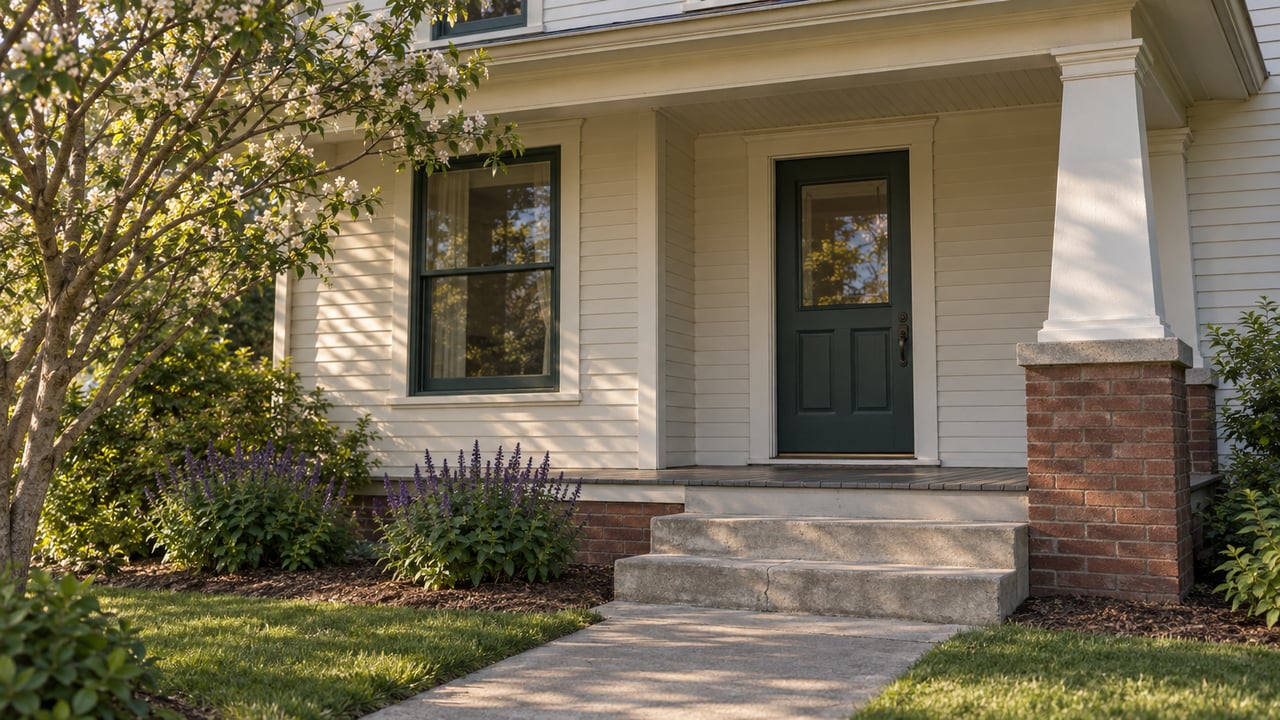
Inside Nampa's city limits sits the Old Nampa Neighborhood Historic District, roughly bounded by 4th Avenue South, 4th Street South, 11th Avenue South, and 9th Street South, about 18 blocks within walking distance of downtown. The district was listed on the National Register of Historic Places in March 2007, and it now includes 243 homes, most of them Craftsman bungalows built between 1920 and 1940, with a scattering of Queen Anne, Colonial Revival, and Tudor Revival houses from the same building boom. According to the National Register documentation, only 13 new houses have been built inside those boundaries in the past 60 years.
That is not a market with room to expand. It is a fixed set of houses inside a fixed set of blocks, and it sits a short walk from Library Square, the Nampa Public Library, the Nampa Farmers Market, and the Third Thursday street festivals that anchor the city's downtown calendar. We covered how much of downtown Nampa's foot traffic concentrates around Library Square and Lakeview Park in an earlier look at the neighborhood's busiest summer stretch. That demand has nowhere new to go inside the historic district, because there is almost nothing new to build.
The numbers show it. Over the three months ending May 2026, the median sale price in Old Nampa was $340,000, with a price per square foot of $264, up 20.5 percent year over year. Homes there sold in a median of 17 days. Compare that to the citywide figures for the quarter just after it: $250 per square foot, flat year over year, and closer to five weeks on market. The neighborhood with almost no new supply is appreciating on a per-square-foot basis while the city around it is flat, and homes there sold in about half the time.
That is not a coincidence. It is what happens when demand for a specific kind of inventory, walkable, historic, close to downtown amenities, runs into a supply that stopped growing decades ago.
Buying into that scarcity comes with a wrinkle worth understanding before making an offer. The Old Nampa Historic District's National Register listing is, in the city's own words, an honorary one. It carries no local enforcement and no design protections. The City of Nampa has spent several years working toward changing that: a 2022 grant application, a 2024 neighborhood survey, and in January 2025 a City Council vote authorizing the mayor to pursue a Certified Local Government grant to fund boundary refinement and design guideline work toward a local historic district designation.
If that local designation is eventually adopted, exterior changes that already require a building permit, replacing windows, larger additions, new construction on an infill lot, could face an added layer of design review from the city. The city has been clear that paint color would not be regulated, with one exception: unpainted brick and stone would be protected from being painted over. Nothing has been finalized as of this writing, and the process has moved slowly and deliberately, with staff emphasizing that any guidelines are meant to avoid burdening homeowners. But a buyer purchasing a fixer-upper bungalow today should know the neighborhood's regulatory character may look different in a few years than it does now. You can read the city's own explanation of the Old Nampa Historic District process directly.
If Old Nampa is defined by what can't be built, the other end of the city is defined by what's being built right now, and by the tradeoffs that come with it.
In mid-June 2026, the Nampa City Council voted 3-2 to approve the Highline Estates Subdivision, a 355-home development on roughly 93 acres near the intersection of Franklin Boulevard and Linden Road in north Nampa, across from Ridgevue High School. Council members Bills, Griffin, and Reynolds voted in favor; Skaug and Rodriguez voted against. The vote followed months of public hearings, and it illustrates the kind of friction that doesn't show up in a listing description.
The property is crossed by 15 Mile Creek and the High Line feeder canal, which means a floodplain study and a conditional letter of map revision are required before construction proceeds, and the Pioneer Irrigation District has to sign off on any work near the canal. Early versions of the plan drew Council pushback over open space, specifically whether drainage basins designed to collect stormwater and drain within 72 hours should count toward the project's recreational acreage. The developer added amenities, pickleball and bocce courts, a tot lot, picnic pavilions, and a walking path, and the revised plan came in at just over the required qualified open space. Construction is planned in phases of roughly 50 to 60 homes at a time, each phase taking a year to a year and a half, meaning full build-out will likely take several years from approval. You can read BoiseDev's coverage of the council debate for the full back-and-forth.
One number from that meeting is worth sitting with. During the discussion, a council member raised the city's own estimate that each new rooftop in Nampa may be subsidized by roughly $700 to $1,200 once the full cost of police, fire, road, and water infrastructure is factored in. A separate city fiscal analysis projected the city and school district would break even on the cost of serving Highline Estates within about seven years. None of that shows up in a builder's price sheet, but it shapes the pace and character of growth on that side of town, and it's part of why the council asked for a broader workshop on growth costs before approving the next subdivision in line.
A buyer weighing Nampa against Meridian or Boise on median price alone is really choosing between two different kinds of ownership without realizing it. One is a fixed, century-old inventory near a revitalized downtown, appreciating quickly because it can't expand, with a possible design-review layer arriving in the coming years. The other is new construction on the growing edge of the city, with real floodplain and infrastructure considerations, a multi-year build-out, and open space that may look different on a site plan than it does on the ground.
Both are legitimately "Nampa." Neither is captured by the single number most people start with. If you're comparing what your money buys across the Treasure Valley, it helps to look at Nampa's neighborhood-level details rather than the city median alone, and to ask which of these two markets actually matches what you're trying to buy.
If I buy in the Old Nampa Historic District, will I need city approval to renovate? Not currently. The National Register listing carries no local design requirements. If the city eventually adopts a local historic district ordinance, exterior work that already requires a building permit could face additional review, though the city has stated most decisions would remain the owner's; paint color would not be regulated, except that unpainted brick and stone would be protected from being painted over.
Is Highline Estates in a flood zone? The property is crossed by 15 Mile Creek and the High Line feeder canal, which triggered a required floodplain study and a conditional letter of map revision as part of the approval process. Ask your agent for the current floodplain determination on any specific lot before writing an offer.
How long until Highline Estates is fully built? Construction is planned in phases of 50 to 60 homes, with each phase taking roughly a year to a year and a half. Full build-out is expected to take several years from the June 2026 approval, so early buyers should expect ongoing construction activity nearby for some time.
If you're weighing a century-old bungalow against a new-build lot in Nampa, or trying to figure out which version of the city actually fits your plans, Elizabeth Hume can walk through the numbers behind both. Let's Connect.
This article is general information, not legal, tax or financial advice. Consult a qualified professional about your situation.
Stay up to date on the latest real estate trends.

Why Idaho homebuyers should think about homeowners insurance before the inspection period is over.
Experience luxury real estate guided by over 20 years of expertise, strategic insight, and unwavering integrity. Every transaction is handled with personalized attention, skilled advocacy, and a commitment to achieving your goals.
Elizabeth Hume
[email protected]
208.860.5451
License #AB30910
2025 E Riverside Dr Ste 260 Eagle, ID 83616